Inside the Tower of London Season 9 Premiere Recap
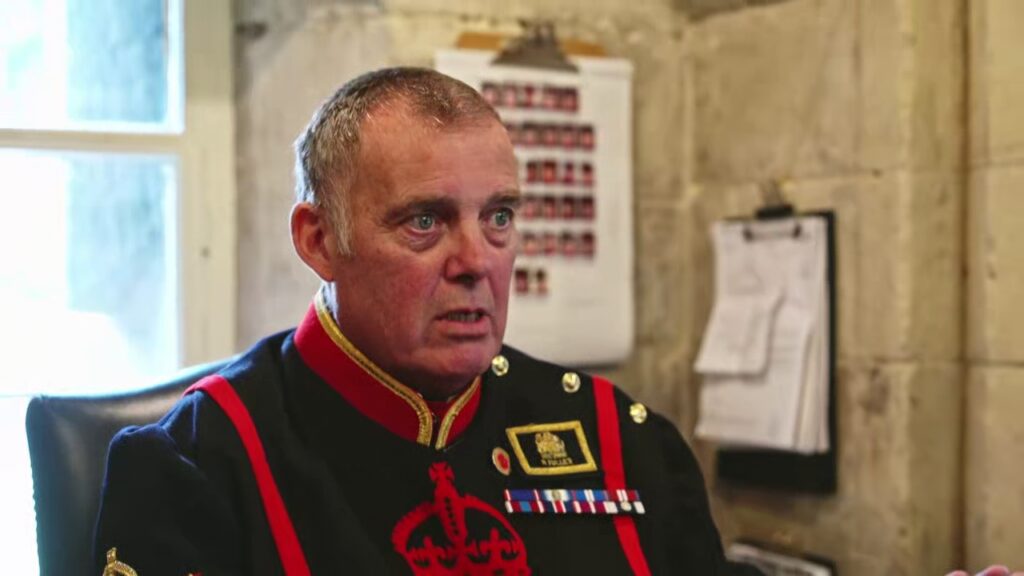
The ninth-season premiere of Inside the Tower of London builds itself around a quiet double-vacancy at the top of the Beefeater hierarchy, with both Chief Yeoman Warder Rob Fuller and Yeoman Gaoler Clive Towell retiring on the same day for the first time in modern Tower history. The opening hour also delivers two of the show's grislier history segments to date: chief historian Tracy Borman unpacks the 1601 beheading of Robert Devereux by an executioner whose life Devereux had personally saved, and a deep dive into Tyburn's 24-person gallows, where condemned prisoners performed a slow asphyxiation routine the crowds nicknamed the Tyburn Jig.
(The following is a recap of Inside the Tower of London season 9, episode 1, with full spoilers, insofar as a documentary on 900 years of medieval history can be spoiled.)
What happens in Inside the Tower of London season 9 episode 1?
The episode runs two parallel storylines: a modern-day succession crisis as Chief Yeoman Warder Rob Fuller and Yeoman Gaoler Clive Towell announce simultaneous retirements after nearly 15 years of service, and a pair of historical segments led by chief historian Tracy Borman and curator Kate Clements about the Tower's grim execution past. The two threads close with Paul Langley confirmed as new chief, John "JD" Donald as new gaoler, and a quiet baton-handover scene between Rob and Paul.
Narrator Jason Watkins (returning for season 9) opens with the show's usual cold open: yeoman warder Paul Langley unlocking the medieval palace at 8:30 AM, raven team member Gary Thynne feeding the resident ravens before they steal sandwiches from tourists, and the 35-strong Beefeater crew arriving for their daily tour duties. Standard format setup.
The pivot comes when Rob and Clive's joint retirement is announced over a quiet cup of tea in the Byward Tower. It's a much bigger structural moment for the Tower than the show plays it as, since these two roles are usually filled by internal promotion in lockstep (gaoler steps up to chief, sergeant steps up to gaoler), and both vacating at once forces a fully open competition among the 35 Yeoman Warders for the first time in modern memory.
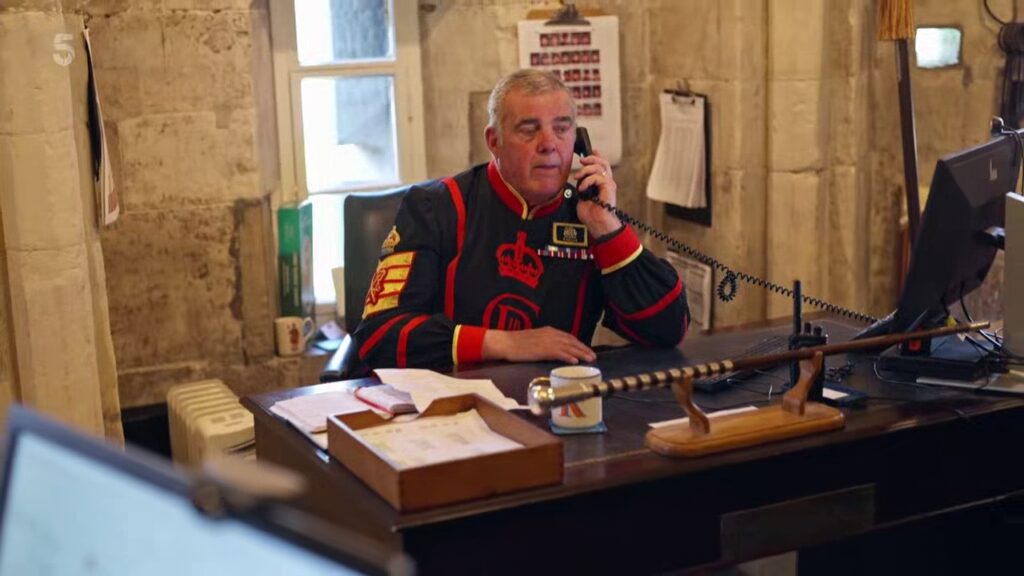
Why are both the Chief Yeoman Warder and the Yeoman Gaoler retiring at the same time?
Rob and Clive deliberately timed their retirements to coincide with the second anniversary of when they started in their current roles together, making the moment symbolically poignant rather than logistically convenient for the Tower. Both have done more than four decades in uniform (Rob from the Navy, Clive from the Army) and have led the Beefeaters through Elizabeth II's funeral and King Charles's coronation. They've decided it's time.
Rob's retirement plan is being "a live-in grandad." Clive's plan is to buy a sailing boat with his wife, then learn to sail, in that order. (English retirement at its most English.)
The double retirement triggers the episode's biggest format change for the show itself: rather than the usual internal-promotion ladder, Tower governor Brigadier Andrew Jackson and operations manager Dan Hawkins open both posts to applications from any of the 35 serving warders. Andrew calls it "a really exciting thing to do," which is governor-speak for "we cannot do this any other way without breaking the chain of command."
There's a craft observation worth pulling out here. The show is editing the retirement-announcement scenes in deliberate parallel against the historical execution segments, with modern "passing of the baton" rituals cut directly against Tudor beheading rituals. The narrator never names this parallel, but it's doing thematic work for anyone watching closely.
Who are the new Chief Yeoman Warder and Yeoman Gaoler?
The new Chief Yeoman Warder is Paul Langley, a 35-year Royal Air Force veteran who's only been a Beefeater for four years, making him an unusually junior appointment for the top job. The new Yeoman Gaoler is John "JD" Donald, an 11-year Tower veteran from the Royal Hussars who personally served alongside outgoing gaoler Clive Towell in Germany in 1986 and has known him longer than anyone else at the Tower.
Paul's pitch to the recruitment panel was a quiet bit of self-confidence: the Chief Yeoman Warder role is "not too dissimilar to what any sergeant major would do," and he had the relevant 35-year RAF leadership experience to handle it. The panel agreed. Dan Hawkins specifically praises Paul's crisis management, public-handling skills, and standing among the other warders.
My read is that Paul's appointment is the show's quiet headline. Promoting someone after only four years at the Tower, when most senior Beefeaters have a decade-plus tenure, is a meaningful break from how this institution usually moves. He'll be the second-ever RAF chief in Tower history.
JD's appointment is the more sentimental story. He's been following Clive's footsteps since they were "young boys" of 20 in the Royal Hussars in Fallingbostel, and the gaoler post he's inheriting is the same one Clive held for the past two years.
The promotions are sealed with a glass of port in the governor's office, per Tower tradition. JD's first words afterwards are about "big shoes to fill, etcetera." (For once, that phrase is doing real work.)
What was the story of Robert Devereux and his executioner Thomas Derick?
Robert Devereux, the second Earl of Essex and a favourite of Queen Elizabeth I, was beheaded on Tower Green in 1601 after attempting to overthrow Elizabeth, and his executioner was a man named Thomas Derick whose life Devereux had personally saved years earlier when Derick had been convicted of rape during their shared military service in Calais. Devereux offered Derick the choice between death and becoming an executioner. Derick chose the latter, and decades later was the man who swung the axe on the man who'd saved him.
Tracy Borman uncovers the detail in a contemporary ballad of the execution, which contains the unusually rare practice of actually naming the executioner. Executioners almost never appear in official accounts by name, partly because they were socially ostracised, often forced into the work, and lived under constant threat of revenge from victims' families.
Derick is thought to have personally executed up to 3,000 people across his career, which puts him in genuine contention for one of the most prolific executioners in English history. He died in obscurity, as most of them did.
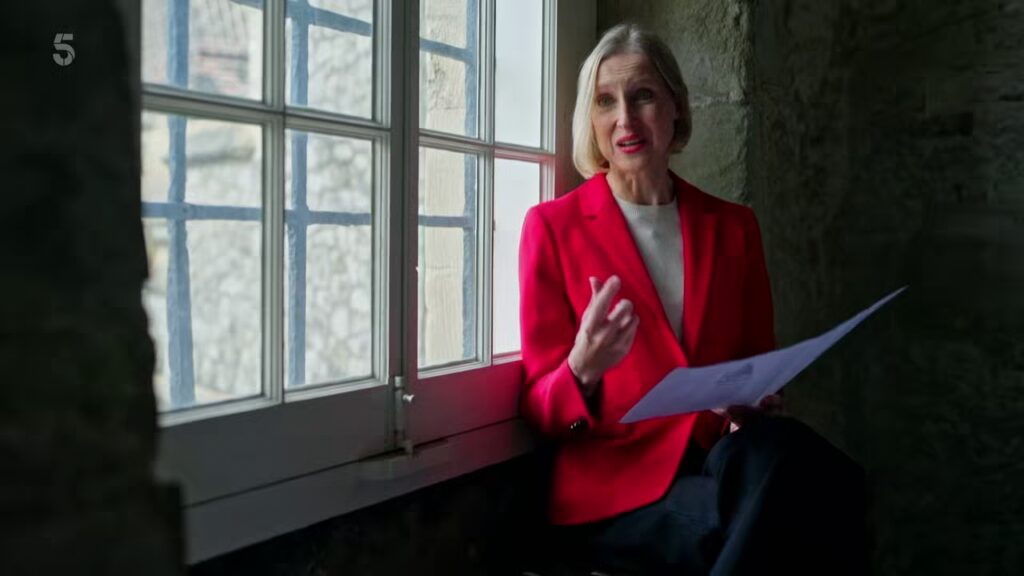
This is the kind of segment that justifies Tracy Borman's nine-season tenure as the show's chief historian. She introduces the story with the deadpan delivery of someone genuinely delighted by it. That tone should not work, and it works.
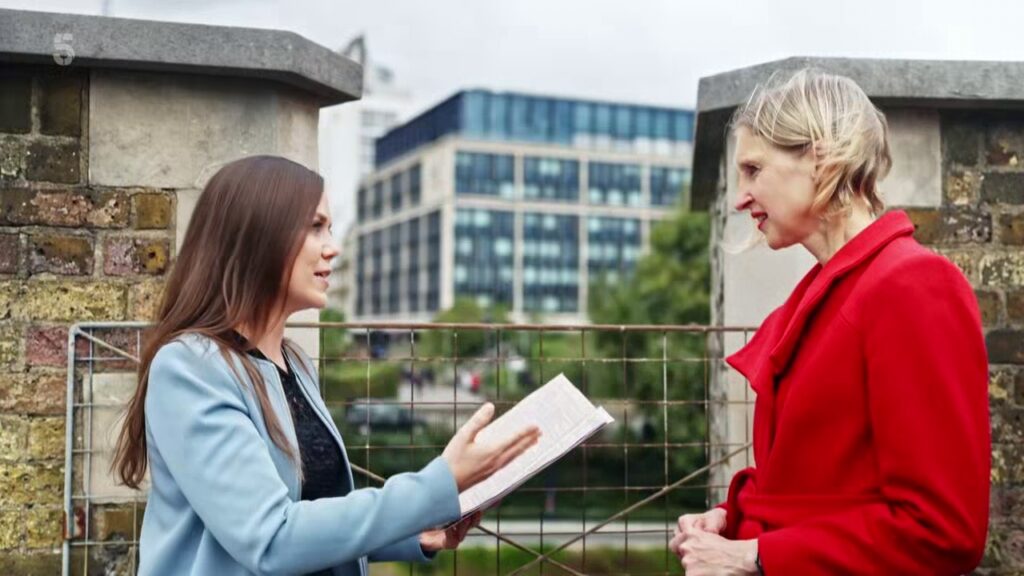
What was the Tyburn Tree, and how did public hangings become mass entertainment?
The Tyburn Tree was a three-sided wooden gallows that stood six metres high near what is now Marble Arch in central London, designed during the reign of Elizabeth I and capable of hanging 24 people simultaneously, 8 on each of its three long beams. Prisoners were wheeled under the structure in a cart, attached to the beam by rope, and the cart was pulled away, leaving them to die by slow asphyxiation over up to 15 minutes. Crowds called this the Tyburn Jig.
Public executions at Tyburn drew up to 50,000 spectators at a time and were declared public holidays for the working classes. People bought food, drinks, and souvenirs. Magazines published detailed accounts. Curator Kate Clements walks Tracy through one such 1746 report of the Earl of Kilmarnock and Lord Balmerino, two Scottish nobles convicted of trying to overthrow King George II, in which the executioner is so emotionally affected by Kilmarnock's composure that he himself starts crying before the strike.
Kate's framing of the whole segment lands with one line. "These are real people, and this is a horrific way to die."
The Tyburn segment also covers Francis Dereham and Thomas Culpeper, the two men accused of having affairs with Henry VIII's fifth wife Catherine Howard, who were drawn from the Tower to Tyburn in December 1541 to suffer a "traitor's death," the most brutal punishment available: dragged to the scaffold, hanged still alive, then disemboweled, then chopped into pieces and displayed on London's main roads for months. Body parts as municipal signage.
In our viewing, the show's choice to film the Tyburn segment at the actual modern site (now a traffic island near Marble Arch) is the smartest visual decision of the episode. Tracy notes that most of the thousands of people driving past every day have no idea what used to happen there.
The last hanging at Tyburn was in 1783. Britain's last public execution was outside Newgate Prison in 1868, on what is now the site of the Old Bailey.
Who moves into 7 Tower Green after Rob Fuller retires?
The much-coveted 7 Tower Green property goes to Yeoman Warder Baz Gray, a recently sworn-in Beefeater who's been living alone in a probation flat for the past six months and is finally moving in his family and belongings. The two-storey house is around 300 years old, sits directly on the Tower's village green where three queens of England were beheaded, and shares a wall with the King's House.
The moving-in process is the gentle comic relief of the back half of the episode. Baz has had to time his removal van delivery to after the public have left for the day, then physically wrestle modern fridge-freezers up four flights of 300-year-old spiral stairs with the help of cajoled colleagues. There's also a master bedroom where the ceiling is too low for Baz to stand fully upright, which the show plays for the gag it is.
The detail that lands hardest is Baz looking out his kitchen window and pointing out that "three queens of England were beheaded outside of my kitchen window." That's a sentence very few homeowners get to say.
How does the episode end?
The episode closes on outgoing Chief Yeoman Warder Rob Fuller's final handover meeting with his successor Paul Langley, in which Rob passes Paul the ceremonial baton (the "badge of authority" for the chief) with both their names already engraved on it. Rob's parting advice for managing the office: buy chocolate biscuits.
Paul takes the baton with the reverence the show wants him to. "Wow. It's like Kryptonite. I can feel the power in it already."
Then Rob walks Paul out of the chief's office and the show cuts to a montage of Rob's 14 years at the Tower: leading Queen Elizabeth II's funeral procession, his personal farewell to the Queen with a raised Tudor bonnet, the coronation, his son and daughter both getting married at the Tower, his grandchildren being christened there. Lifelong friendships. The novelty that never wore off.
His closing words, delivered straight to camera: "I still love the place, and I always will."
So, Paul Langley as chief after just four years, fair shout or too soon? Let me know in the comments.Share
Details
- Season
- 9
- Episode
- 1
- Air date
- 2026-05-20
- Runtime
- 44 min
About the show
 Inside the Tower of LondonChannel 5 · Thu · 20:00 ET
1 recap
Inside the Tower of LondonChannel 5 · Thu · 20:00 ET
1 recap