
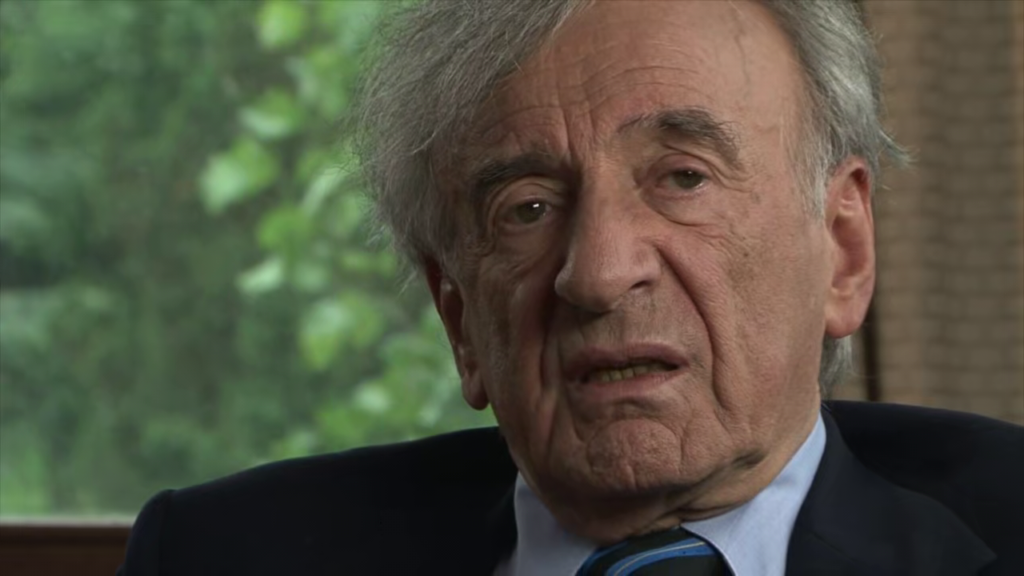
History class never prepared anyone for a story like this. Not even close. Because this episode of American Masters doesn’t just talk about Elie Wiesel. It quietly pulls you into the emotional aftershock of a life shaped by survival, guilt, faith, and the burden of remembering when the world would rather move on.
What hit me first wasn’t a date or a historical event. It was the feeling that this is a man who never really left the past. Even decades later, even as a teacher, writer, and Nobel Prize winner, part of him was still that teenage boy who walked out of the camps without his family. And the episode makes it painfully clear why.
Before everything fell apart, his life was small in the best way. A tight knit Jewish community. Traditions that made the week feel meaningful. Family meals, study, prayer, neighbors who knew each other. Normal. That word keeps echoing because you know what’s coming, and the normality almost hurts more than the tragedy. It shows exactly what was stolen.
Then the world shifts fast. Rules change. Rights disappear. People who were neighbors turn into bystanders. Within weeks, home turns into a holding space before deportation. That speed matters. It explains why so many families, including his, couldn’t fully grasp what was happening until it was too late. Hope kept whispering that it could not get worse. It did.
Once he is in the camps with his father, survival becomes a brutal daily calculation. Not heroic. Not cinematic. Just exhausting. Hunger, fear, cold, and the constant threat of death grind people down until all that is left is instinct. The episode really leans into the emotional damage here, especially the complicated guilt he carries after his father dies. He survives. His father does not. That imbalance follows him for the rest of his life like a shadow he cannot step out of.
Liberation does not magically fix anything either. Freedom sounds beautiful, but for him it comes with emptiness. No home to go back to. No parents. No clear future. He is a teenager trying to figure out how to exist in a world that feels both unfamiliar and unfair. The documentary shows how long he stays silent about what happened. Not because he forgot, but because the memories were too heavy and the world did not seem ready to listen anyway.
What finally pushes him to speak is not fame or ambition. It is responsibility. That is the turning point. He realizes that staying silent feels like letting the people who died disappear a second time. Writing becomes his way of fighting that. His book Night is not just a memoir. It is a refusal to let the horror be softened or ignored. The episode makes a big point about how long it took for people to actually pay attention. The world did not instantly embrace these stories. It had to be forced to confront them.
His faith is another complicated thread running through everything. He does not walk away from religion, but it is never simple again. After what he witnessed, belief becomes a struggle, a debate, sometimes even an argument with God. That tension shapes the rest of his life. He keeps asking moral questions, not because he has easy answers, but because he knows what happens when people stop asking.
His personal life shows another side of that struggle. Falling in love, getting married, becoming a father. Those choices are loaded for someone who has seen humanity at its worst. Bringing a child into the world feels risky to him. Almost unfair. But it also becomes a quiet act of defiance. Life continuing is its own form of resistance.
The episode gets very emotional when it looks at his relationship with his son. Growing up with a father who carries so much history is not simple. There is pride, but also pressure. Memory lives in their house like another family member. When they travel back to his hometown together, it is not just a visit. It is a confrontation between past and present, between someone who lived the horror and someone who inherited its echo.
One of the most powerful parts of the episode focuses on when Wiesel steps into a public moral role, not just as a survivor but as a voice challenging world leaders. There is a moment where he openly urges political power not to blur the line between victims and perpetrators. That decision shows exactly who he became. He was not interested in comfort or polite silence. He believed memory demands action.

Teaching becomes another extension of that mission. In classrooms, with students who were born decades after the Holocaust, he keeps the conversation alive. Not to trap them in the past, but to sharpen their sense of right and wrong in the present. The message is clear. Remembering is not about staying sad. It is about staying alert.
By the time the episode reaches the end of his life, the tone shifts again. There is grief, of course, but also this sense that his voice does not really disappear. His family talks about him as if he is still part of the room, still part of the conversation. In a way, he is. Every time someone reads his words or hears his story, that act of witnessing continues.
What this episode really leaves you with is not just respect for one man. It is a challenge. Silence helps cruelty grow. Memory is uncomfortable, but it is necessary. Wiesel’s life shows how surviving something terrible can turn into a lifelong effort to protect others from the same darkness.
After watching this, it is hard not to look at the world today and wonder whether we are listening as carefully as we should.